
As the healthcare landscape in Sri Lanka evolves, many medical practices are transitioning towards digital solutions to enhance patient care and operational efficiency. This guide delves into the framework of establishing a paperless clinic in Sri Lanka, spotlighting critical elements such as Digital Healthcare Solutions, Clinical Management Systems, and Electronic Medical Records. Understanding these components can significantly boost healthcare practices, aligning with compliance standards and improving patient engagement.
Understanding Paperless Clinics in Sri Lanka
In the evolving landscape of healthcare in Sri Lanka, the concept of paperless clinics is gaining momentum, driven by the increasing need for efficiency, accuracy, and improved patient care. A paperless clinic eliminates the reliance on traditional paper-based practices, embracing digital solutions that streamline healthcare workflows. This transformation is facilitated by Clinical Management Systems (CMS), such as DocPP, specifically designed to cater to the unique requirements of Sri Lankan doctors, clinics, and healthcare organisations.
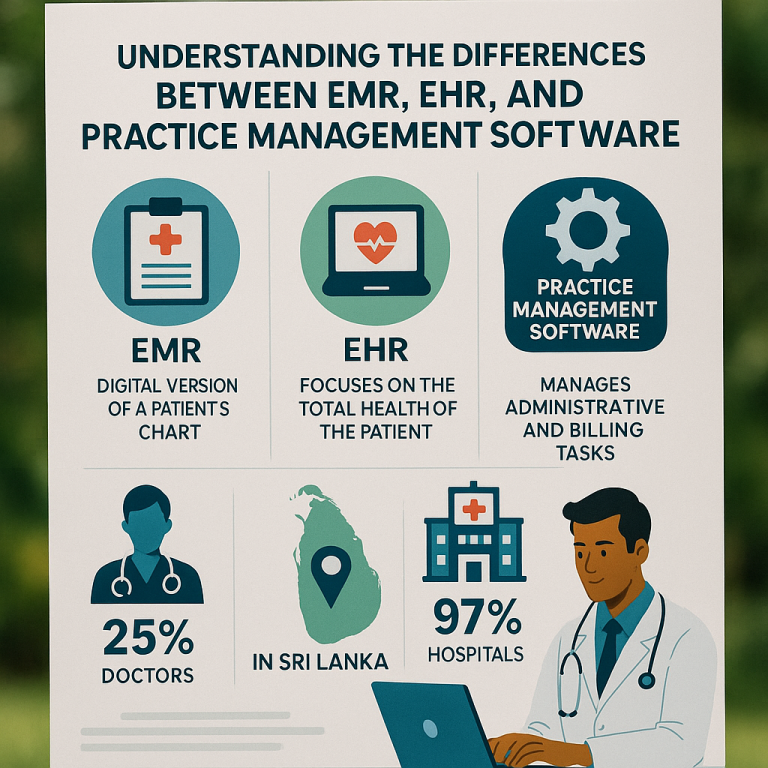
Within this context, the integration of Electronic Medical Records (EMR) and Electronic Health Records (EHR) stands at the forefront of the digital healthcare revolution. EMRs provide a comprehensive digital version of patients’ medical histories, enabling practitioners to access and update records in real-time. This is particularly beneficial for Sri Lankan private practitioners and specialists who often juggle myriad patient interactions. With a robust CMS like DocPP, healthcare providers can maintain accurate patient records that are easily retrievable and shareable, facilitating better clinical decision-making.
Sri Lankan doctors face unique challenges, such as high patient volumes and the need for seamless coordination among healthcare professionals. Here, digital solutions play a pivotal role in enhancing practice management. Features such as appointment scheduling and digital prescriptions contribute significantly to operational efficiency. For example, a consultant in Colombo could manage follow-up appointments with patients from different districts, all while ensuring communication with referring doctors and laboratories through an integrated platform. DocPP offers tools to simplify appointment management, thereby reducing no-show rates and optimising time management.
Billing is another essential aspect of practice management that benefits from digitisation. By utilising comprehensive software solutions, Sri Lankan clinics can manage transactions, track payments, and issue digital invoices. This not only increases transparency but also enhances cash flow, providing financial stability for healthcare providers. Furthermore, compliance with the regulations set forth by the Ministry of Health Sri Lanka ensures that billing practices align with national standards, contributing to a more organised healthcare environment.
The integration of telemedicine is becoming increasingly significant, particularly in a country where accessibility to healthcare can vary greatly. Telemedicine platforms enable Sri Lankan doctors to consult with patients remotely, expanding their reach to rural areas and providing essential healthcare services. This is crucial in a post-pandemic world, where patients may prefer virtual consultations. DocPP includes features that support telemedicine, allowing physicians to conduct consultations while securely managing patient records.
In terms of clinical documentation, the transition to a paperless environment fosters precision and reduces errors that often arise from legible handwriting or misplaced documents. By adopting a digital CMS, healthcare professionals can ensure that all clinical notes are systematically archived, allowing for easy retrieval during follow-ups or referrals. Moreover, the health analytics capabilities embedded within such systems allow healthcare providers to generate reports that can identify trends and areas for improvement in patient care.
As Sri Lankan healthcare continues to evolve, the importance of embracing innovative digital solutions cannot be overstated. Healthcare digitisation initiatives by the Sri Lankan government complement the work being done by private healthcare providers, encouraging the adoption of systems that enhance patient management and clinical practice. Clinics equipped with comprehensive practice management software, such as DocPP, are better positioned to navigate the complexities of modern healthcare. They can respond to patients’ needs promptly while also contributing to a more efficient healthcare ecosystem.
In conclusion, understanding the dynamics of a paperless clinic in Sri Lanka reveals the profound impact of digital healthcare solutions like DocPP on clinical operations. By harnessing the benefits of EMRs, telemedicine, appointment scheduling, and effective practice management, healthcare providers can significantly improve patient care, streamline operations, and ultimately contribute to a more modern and digitised healthcare system in the country. Embracing these technologies not only positions practitioners at the forefront of healthcare innovation but also promotes a culture of quality care that resonates with patients across Sri Lanka.
The Role of Digital Healthcare Solutions
In Sri Lanka’s evolving healthcare landscape, the role of digital healthcare solutions has become increasingly significant, particularly for private practice management. With a growing emphasis on efficiency and accuracy, implementing a Clinical Management System (CMS) has transformed how healthcare providers operate, enhancing patient management and clinic operations. Among these solutions, systems like DocPP offer a tailored approach to meet the specific needs of Sri Lankan doctors, clinics, specialists, and healthcare organisations.
A Clinical Management System serves as the backbone of a paperless clinic, seamlessly integrating various components of healthcare delivery. For instance, Electronic Medical Records (EMR) and Electronic Health Records (EHR) ensure that patient information is digitised and readily accessible, allowing healthcare professionals to retrieve medical histories, lab results, and prior consultations at a moment’s notice. This accessibility reduces turnaround times for treatment decisions and significantly enhances the quality of care provided to patients.
In the unique context of Sri Lanka, where many private clinics and healthcare entities are striving to adopt more streamlined workflows, integration of appointment scheduling tools enhances patient flow management. This not only minimises waiting times but also ensures that the clinic is operating at optimal capacity. For example, by using a system that automates appointment bookings and reminders, clinics can better manage patient influx while reducing no-show rates, thereby improving overall service efficiency.
One of the commendable features of a robust CMS, such as one exemplified by DocPP, is the capability for digital prescriptions. In an era where paper-based prescriptions can often be lost or misinterpreted, electronic prescriptions minimise errors related to handwriting and improve medication management. This is particularly important in Sri Lanka, where the Ministry of Health has emphasised the need for safer medication practices. By ensuring that prescriptions are legible and accurately reflect the intended treatment plan, healthcare professionals can foster better outcomes and enhance patient safety.
In addition to streamlining appointment management and prescriptions, practice management software integrated within a CMS supports billing and invoicing processes. Proper financial management within a clinic is crucial, not just for the sustainability of the practice but also for ensuring that patients receive transparent pricing. Automated billing systems that track consultations, diagnostics, and medications facilitate quicker billing cycles and reduce the administrative burden on staff, allowing them to focus their efforts on patient care.
Telemedicine has also gained traction in Sri Lanka, especially in the wake of the COVID-19 pandemic. The integration of telemedicine solutions into a Clinical Management System can expand access to healthcare, allowing patients in remote areas to consult with specialists without the need for extensive travel. This approach is incredibly valuable in Sri Lanka, where access to specialised care can often be limited. By leveraging technological solutions, healthcare providers can ensure continuity of care, even amidst disruptions.
Moreover, enhanced clinical documentation capabilities afforded by a CMS play a vital role in maintaining patient care standards. When information is documented digitally, it can be easily shared among interdisciplinary teams, promoting a collaborative approach to patient care. Such coordination is especially pertinent in managing chronic diseases that require input from multiple specialists. Moreover, comprehensive clinical documentation can aid in follow-up management, ensuring that patients receive timely check-ups and interventions.
Implementing healthcare analytics into a CMS can revolutionise the way healthcare practices function. By harnessing data collected from patient interactions, healthcare providers can evaluate the effectiveness of treatments, track outcome measures, and identify areas needing improvement. This data-driven approach aligns with ongoing healthcare digitisation initiatives in Sri Lanka and supports the Ministry of Health’s vision for a more efficient and responsive healthcare system.
In summary, the integration of digital healthcare solutions through a Clinical Management System such as DocPP offers substantial benefits to Sri Lankan healthcare providers. By digitising patient records, automating administrative tasks, enhancing billing processes, and embracing telemedicine, doctors and clinics not only improve their operational efficiency but also elevate the standard of care they provide. As healthcare continues to evolve, the adoption of such technologies will be paramount in achieving the goals of digitisation and improved health outcomes for all Sri Lankans.
Implementing a Clinical Management System
Implementing a Clinical Management System in Sri Lanka involves a nuanced understanding of local healthcare workflows, regulations, and the challenges specific to medical practices in the region. For Sri Lankan doctors, clinics, and healthcare organisations, adopting a Clinical Management System (CMS) is not merely a digital transformation initiative but a vital step toward streamlining clinical operations, enhancing patient care, and ensuring compliance with healthcare standards set forth by authorities like the Ministry of Health Sri Lanka.
The integration of a CMS, such as DocPP, offers a comprehensive solution tailored to the unique needs of Sri Lankan healthcare professionals. These systems facilitate the management of patient data—allowing for the efficient handling of Electronic Medical Records (EMRs) and improving the overall management of patient interactions. With the importance of accurate and accessible patient records underscored by the Sri Lanka Medical Council’s regulations, a robust CMS enables physicians to maintain detailed patient histories that can be accessed instantly, thus improving diagnostic accuracy and treatment efficacy.
In a typical private practice setting, the implementation of a CMS can significantly enhance clinical workflows. Doctors can manage appointments with greater efficiency, reducing the prevalence of scheduling conflicts or patient no-shows through automated reminders and reminders via SMS or email. This aspect not only streamlines clinic operations but also enhances patient satisfaction—an essential consideration in the competitive landscape of Sri Lanka’s private healthcare sector.
Billing and administration are also transformed with the integration of practice management software within a CMS. Features that handle invoicing, insurance claims, and payment processing can be automated, allowing healthcare providers to focus more on patient care rather than administrative demands. For instance, as hospitals and clinics increasingly adopt digital prescriptions, the ability to manage billing in conjunction with EMRs can reduce discrepancies and improve financial tracking.
Telemedicine capabilities are another critical component of modern CMS platforms, particularly relevant in light of the challenges brought forth by the COVID-19 pandemic. South Asian healthcare has witnessed a marked shift towards remote consultations, and tools like a digital appointment scheduler coupled with an EHR system can significantly aid in the movement towards a paperless practice. Patients can receive care from their doctors while eliminating the constraints of geographical barriers, thereby improving access to specialists, particularly in underserved areas of the country. Maintaining continuity of care through clinical documentation during telehealth consultations provides an additional layer of patient safety and satisfaction.
Healthcare analytics embedded within a CMS can guide decision-making processes by providing insights into patient demographics, treatment outcomes, and operational efficiencies. These analytics can help healthcare administrators identify trends, manage resources effectively, and improve the overall efficacy of care delivery. For example, knowing common health concerns within a demographic can help clinics tailor their services and outreach initiatives to improve community health outcomes.
Implementing a Clinical Management System requires thorough training and change management strategies to ensure that all staff members—from receptionists to healthcare providers—are equipped to utilise the tools efficiently. Engaging with healthcare IT specialists during this transition can provide valuable insights into customising the system to fit specific clinic workflows and ensuring compliance with local healthcare regulations.
In summary, embracing a Clinical Management System is a critical investment for Sri Lankan healthcare providers seeking to modernise their operations. With solutions like DocPP, healthcare organisations can achieve a seamless integration of patient management, clinical documentation, and administrative functions, allowing doctors to deliver high-quality care while ensuring that their practices thrive in an increasingly digital landscape. By focusing on enhancements in patient engagement, operational efficiency, and data management, physicians stand to significantly benefit from this technological transition.
Embracing Electronic Medical Records
Embracing Electronic Medical Records (EMR) is a vital step towards enhancing the efficiency and functionality of healthcare practices in Sri Lanka. For a growing number of doctors, clinics, and medical centres throughout the country, the transition to a paperless environment streamlines patient management, reduces administrative burdens, and enhances the overall quality of care.
In the context of the Sri Lankan healthcare system, where public and private sectors coexist, the integration of EMRs can significantly optimise workflow. Physicians and healthcare providers are increasingly dealing with the need for accurate, up-to-date patient records that are easily accessible. A well-implemented Clinical Management System, such as DocPP, allows healthcare professionals to manage patient records electronically, which facilitates smoother operations within clinics and improves interaction with patients.
Electronic Medical Records provide more than just a digital filing system; they represent an evolution in clinical documentation. By moving away from paper, clinics can ensure that all patient interactions, diagnoses, treatments, and prescriptions are documented consistently and accurately. In Sri Lanka, this is particularly pertinent where healthcare providers are required to adhere to stringent regulations set forth by the Ministry of Health. Furthermore, with the Sri Lanka Medical Council encouraging digitisation, the transition to EMRs can align local practices with national policy.
Among the key functionalities of systems like DocPP is patient record management, which covers everything from appointment scheduling to follow-up management. For example, a general practitioner in Colombo can utilise EMR capabilities to efficiently track patient history, simplifying the process of recalling medical details for ongoing treatment. Moreover, the ease of retrieving digital prescriptions streamlines patient visits, reducing wait times significantly and increasing overall patient satisfaction.
Another essential advantage of integrating EMRs is enhanced billing and financial tracking. The complexities of private practice management in Sri Lanka can be daunting. Nevertheless, utilising software that automates these processes mitigates common administrative errors. For instance, the integration of billing systems allows clinics to manage payments and insurance claims directly from their EMRs, hence improving cash flow and reducing the manual effort often associated with billing.
Telemedicine has also emerged as a crucial component of modern healthcare delivery, especially highlighted during the COVID-19 pandemic. Combining EMRs with telehealth solutions facilitates remote consultations while ensuring that doctors have access to a patient’s records and history during online visits. This seamless integration promotes continuity of care and allows healthcare professionals to make informed decisions swiftly, ultimately enhancing patient outcomes.
Furthermore, the use of healthcare analytics within EMR frameworks equips providers with insights derived from patient data. These insights can drive clinical improvements, assist in population health management, and support preventive care initiatives specific to regional health challenges. For example, data collected through EMRs can identify common trends in illnesses that require targeted health interventions, aligning with national health objectives as outlined by the Ministry of Health Sri Lanka.
Implementing a digital environment also prepares clinics for evolving patient expectations. Patients increasingly seek greater involvement in their healthcare processes, and an EMR system like DocPP allows practices to offer a more interactive experience, from online appointment bookings to access to their medical records. This transparency builds trust and enhances the doctor-patient relationship, which is paramount in a developing healthcare landscape.
As Sri Lanka continues to evolve its healthcare system with a focus on digitisation, embracing Electronic Medical Records is not merely a technological upgrade; it is a strategic move towards a more efficient, patient-centered care model. Integrating EMRs into the daily operations of Sri Lankan clinics fosters streamlined processes, enhances the quality of care, and paves the way for an innovative healthcare environment ready to meet the needs of a diverse population.
Optimising Practice Management Software
In optimizing practice management software within the context of Sri Lankan healthcare, it is imperative to prioritize seamless integration of digital solutions into existing clinical workflows. The adoption of a comprehensive Clinical Management System (CMS) such as DocPP can significantly enhance operational efficiency for various healthcare providers, including general practitioners, specialists, and medical centres. A robust system not only streamlines tasks but also ensures compliance with local regulations set forth by entities such as the Ministry of Health Sri Lanka and the Sri Lanka Medical Council.
One of the foundational features of an optimized practice management software is its capability to manage Electronic Medical Records (EMR) effectively. This functionality allows healthcare providers to maintain a systematic repository of patient information, which is vital for improving patient care. By employing digital records, clinicians can access real-time data, including previous consultations, medical history, and lab results, thus enabling informed clinical decision-making. In Sri Lanka, where many clinics still operate on paper-based systems, transitioning to EMR can significantly mitigate the risks associated with lost or misfiled patient records.
Appointment scheduling is another critical feature that translates well into practice management optimization. A user-friendly system can facilitate online booking, reminders, and cancellations, thereby reducing no-show rates. For Sri Lankan practitioners, integrating a digital appointment system can enhance patient satisfaction and improve overall clinic efficiency by allowing staff to focus on direct patient care rather than administrative tasks.
The capabilities of practice management software extend further into digital prescriptions, which are particularly beneficial in managing medication adherence. By enabling clinicians to send prescriptions electronically to pharmacies, the potential for errors is diminished, and patient convenience is increased. This is especially relevant in urban areas in Sri Lanka where access to pharmacies may be limited.
Billing and invoicing processes can also be streamlined through practice management software. Automated billing features help reduce administrative bottlenecks, minimize discrepancies, and ensure timely payments. This is particularly important for private clinics and medical centres operating in a competitive environment, where efficient revenue cycle management is critical for sustainability.
Furthermore, the incorporation of telemedicine capabilities reflects the evolving landscape of healthcare in Sri Lanka. As patient demands shift towards accessibility and convenience, integrating telemedicine features into DocPP can facilitate remote consultations, thus catering to patients who may find it difficult to visit clinics in person. This not only enhances patient engagement but also broadens the reach of healthcare services, particularly in rural or underserved areas.
Clinical documentation is another area where practice management software can yield significant improvements. A centralized platform allows healthcare professionals to streamline documentation processes, ensuring that patient interactions are well-documented and easily retrievable. This capability is essential for follow-up management, enabling healthcare providers to track patient progress effectively and ensure continuity of care.
In terms of healthcare analytics, practice management software should also provide insights into operational performance. Analyzing data regarding patient flows, appointment trends, and billing patterns can aid clinics in making informed decisions about resource allocation and improving service delivery. For Sri Lankan healthcare organizations aiming to scale their operations, leveraging analytics can reveal areas for improvement and efficiency gains.
Ultimately, the optimization of practice management software like DocPP rests on understanding the unique dynamics of Sri Lankan healthcare. This involves aligning digital solutions with local workflows, regulatory requirements, and patient needs. The integration of comprehensive CMS capabilities empowers healthcare providers to transition towards a more digital-centric approach, supporting ongoing efforts to enhance healthcare delivery across the country. By embracing this digital transformation, Sri Lankan doctors can better navigate the complexities of modern healthcare, ultimately leading to improved patient outcomes and clinic success.
Streamlining Clinical Workflow Management
In the current landscape of healthcare in Sri Lanka, the shift towards a paperless system is essential for enhancing clinical workflow management. A well-implemented clinical management system can streamline various processes, ensuring that healthcare providers can focus more on patient care rather than administrative tasks. This is where systems like the DocPP Clinical Management System come into play, bolstering the operational capabilities of clinics and healthcare organisations across the nation.
Clinical workflow management primarily involves coordinating patient care activities while efficiently managing administrative tasks such as appointment scheduling, patient records, billing, and clinical documentation. A good clinical management system enables healthcare providers, including specialists and general practitioners, to achieve this integration seamlessly. In Sri Lanka, where private practice is prevalent, adopting a comprehensive clinical management system can transform the way healthcare services are delivered.
One of the most critical aspects of any clinical management system is the implementation of Electronic Medical Records (EMR) and Electronic Health Records (EHR). By digitising patient records, healthcare providers can reduce time taken for record keeping, enhance data accuracy, and improve accessibility. For instance, GPs managing a bustling private clinic can benefit from instant access to patient histories, lab results, and previous prescriptions through a secure digital platform. This immediate availability of information helps in making informed clinical decisions, ensuring timely interventions.
Efficiency in appointment scheduling is another key advantage. A robust clinical management system allows doctors to manage patient appointments effortlessly, sending reminders to patients and reducing no-shows. In a Sri Lankan context, where time management is crucial in private practice, optimising appointment schedules can lead to increased patient throughput, enhancing productivity. Furthermore, integrating digital prescriptions into this workflow not only expedites the prescribing process but also reduces errors associated with illegible handwriting, ultimately improving patient safety.
Billing processes can often be cumbersome within healthcare settings, but with an effective practice management software, clinics can automate invoicing and payment tracking. This functionality alleviates the financial burdens on administrative staff and allows them to consider other critical aspects of clinic operations. From a healthcare standpoint, streamlining revenue cycles ensures that medical practices can maintain financial viability while focusing on quality patient care.
Moreover, the rise of telemedicine represents an evolution in healthcare delivery, particularly in rural areas of Sri Lanka where access to physicians may be limited. An integrated clinical management system supports telemedicine by providing the necessary digital infrastructure for video consultations, follow-up management, and remote patient monitoring. This is especially valuable in ensuring continuity of care, allowing patients to consult with their healthcare providers without the need to travel, thus saving time and resources for both parties.
Healthcare analytics is yet another crucial element of clinical workflow management. By employing analytical tools embedded within a clinical management system, healthcare providers can gain insights into patient demographics, treatment outcomes, and operational efficiency. This data can inform strategic decisions, allowing clinics to adjust services according to patient needs and ensuring compliance with standards set forth by entities like the Ministry of Health Sri Lanka and the Sri Lanka Medical Council.
As healthcare providers in Sri Lanka navigate the complexities of modern medical practice, the meaningful integration of a clinical management system can mitigate inefficiencies present in traditional paper-based methods. By adopting digital healthcare solutions such as those offered by DocPP, clinics and healthcare organisations can significantly enhance their clinical workflows, improving patient outcomes while enabling practitioners to dedicate more time to direct patient care.
Leveraging Telemedicine in a Paperless Clinic
Leveraging telemedicine effectively within a paperless clinic environment is pivotal for healthcare providers in Sri Lanka. Amid rising demand for accessible healthcare, particularly in rural and underserved areas, telemedicine presents an avenue for bridging gaps. By utilizing a Clinical Management System like DocPP, Sri Lankan doctors can enhance their practice management and operational efficiency, thereby improving patient care outcomes and engagement.
In the traditional healthcare model, patients often face significant barriers, such as long travel distances and long waiting times, particularly in crowded urban centers or remote locations. Telemedicine, when integrated with a robust system like DocPP, allows for effective management of patient records, through Electronic Medical Records (EMR) and Electronic Health Records (EHR), all in a secure digital format. This digital transformation facilitates seamless access to patient history and clinical documentation, ensuring that healthcare professionals can offer personalized care without the constraints of in-person visits.
For instance, a general practitioner in Colombo can conduct consultations with patients in Jaffna or Trincomalee using video conferencing tools embedded within DocPP. This not only saves time but also optimizes appointment scheduling by reducing cancellations and no-shows through easy-to-use digital booking systems. Automated reminders can be sent to patients, ensuring better adherence to follow-ups.
Digital prescriptions generated through the telemedicine interface mitigate the risk of errors associated with handwritten notes and streamline the medication fulfilment process at local pharmacies. Additionally, the interoperability of DocPP with laboratories and diagnostic centres allows for the easy ordering of tests and retrieval of results, further enhancing the telemedicine experience. As a healthcare provider, being able to see lab results during a virtual consultation adds tremendous value to the encounter, enabling timely medical decision-making.
Billing in a paperless environment can be another cumbersome task, which is effectively simplified through DocPP’s comprehensive practice management software. The integration of telemedicine means that billing for consultations can be handled immediately, reducing lag times in payment and ensuring that the practice’s cash flow remains steady. This can also improve the overall financial health of clinics, as they are not reliant on patients coming in for physical visits to generate revenue.
Healthcare analytics feature crucial insights derived from the data collected within telemedicine encounters. By analysing patient interactions, treatment outcomes, and compliance rates, doctors can adapt their approaches and improve efficacy in real time. Moreover, understanding patterns within patient data helps identify potential health crises early, allowing for preventive measures tailored to specific populations, which is particularly relevant in a public health landscape influenced by factors such as endemic diseases.
Navigating the integration of telemedicine within existing workflows can be challenging for some healthcare practitioners. Hence, it’s vital that clinics invest in ongoing training and support to ensure that all staff are proficient in using the DocPP system. This might involve workshops, one-on-one training sessions, and regular feedback loops to address any concerns or hurdles in practice management.
Adapting to telemedicine aligns with the Sri Lankan government’s initiatives aimed at promoting digital healthcare solutions as outlined by the Ministry of Health. By engaging with these technologies, healthcare providers not only comply with the evolving standards set forth by regulatory bodies like the Sri Lanka Medical Council but also position themselves as modern, responsive entities in a competitive marketplace.
As healthcare digitisation continues to flourish within Sri Lanka, leveraging telemedicine through a system such as DocPP enables clinics and healthcare organisations to improve patient management, enhance operational efficiency, and deliver high-quality care. This transformation is not merely about eliminating paper; it is emblematic of a shift towards a more interconnected, data-driven healthcare environment that prioritises patient accessibility and engagement.
Navigating Healthcare Compliance and Data Security
Implementing a paperless medical practice involves a significant transformation in how healthcare providers manage patient information and operations, making compliance and data security critical considerations. In Sri Lanka, where the healthcare landscape is evolving with increasing emphasis on digitisation, clinicians must navigate a complex web of regulatory requirements to protect sensitive patient data while leveraging digital solutions.
In the context of the DocPP Clinical Management System, understanding the intricacies of healthcare compliance can enhance operational efficiencies for doctors, clinics, and medical centres. Compliance with local regulations, such as those outlined by the Ministry of Health Sri Lanka or the Sri Lanka Medical Council, ensures that patient data is managed responsibly, which is vital for gaining patient trust and maintaining the integrity of healthcare services.
For Sri Lankan healthcare providers, one of the key components of compliance relates to how Electronic Medical Records (EMRs) are maintained. DocPP facilitates secure storage and retrieval of patient records, adhering to data protection laws while allowing healthcare providers to access crucial information swiftly. By digitising records, clinics reduce the risk of data breaches often associated with paper files, ensuring that personal health information is safeguarded against unauthorised access.
Moreover, the practice of digital prescriptions and appointment scheduling through a Clinical Management System enhances administrative compliance by streamlining patient flow and reducing documentation errors. Integrating functionalities such as patient management, billing, and follow-up management into a single platform simplifies reporting and auditing processes that are often mandated by regulatory bodies. For instance, when a specialist in Colombo needs to refer a patient to a diagnostic centre, having immediate access to that patient’s complete medical history can ensure timely and informed decision-making, aligning with local compliance requirements.
In addition to operational compliance, it is essential to focus on data security standards. Sri Lankan healthcare facilities, especially private clinics and hospitals, must establish robust cybersecurity protocols to protect patient data against cyber threats. DocPP’s architecture can assist in implementing encryption and access controls, ensuring that sensitive patient information remains confidential. Furthermore, the integration of healthcare analytics within the platform allows for monitoring access patterns to patient records, which can help identify any irregular activities, thereby reinforcing security measures.
Healthcare professionals in Sri Lanka must also consider the implications of telemedicine within the context of compliance and data security. As remote consultations become more prevalent, it is crucial to ensure that telemedicine platforms utilized within DocPP adhere to national guidelines regarding patient confidentiality and secure communications. This includes implementing secure video conferencing tools and ensuring that data transmitted during these consultations is protected, thus complying with legal standards while offering patients the convenience of remote access to healthcare services.
As the digitisation of healthcare continues to evolve, Sri Lankan healthcare providers must actively stay informed about the latest developments in healthcare regulations and technology advancements. Engaging in continuous education on compliance will not only enhance patient care but also empower healthcare professionals to utilise tools like DocPP efficiently.
Ultimately, successful navigation of healthcare compliance and data security in a paperless medical environment requires a holistic approach. By integrating effective Clinical Management Systems into daily practice and maintaining a commitment to securing patient information, Sri Lankan doctors are well-positioned to contribute to a more efficient and trustworthy healthcare system. As the healthcare landscape transitions towards increased digitalisation, being proactive in these areas will serve not just individual practices, but the larger healthcare community in Sri Lanka.
The Future of Healthcare Digitisation in Sri Lanka
In the era where technology permeates every aspect of life, the digitisation of healthcare in Sri Lanka paves the way toward enhanced efficiency and improved patient outcomes. The transition from traditional, paper-based systems to digital mechanisms not only promotes better management of healthcare workflows but also addresses the increasing demands for quality patient care across the country.
The implementation of a Clinical Management System (CMS) such as DocPP stands out as a pivotal element in this transformation. Designed specifically for Sri Lankan doctors, clinics, specialists, and healthcare organisations, DocPP aligns seamlessly with local practice management requirements while incorporating international best practices in healthcare digitisation.
The use of Electronic Medical Records (EMR) within this framework is essential. EMRs serve as digital counterparts to paper charts, ensuring that vital patient information—such as medical history, medications, and allergies—is efficiently stored and easily accessible. This digitisation diminishes the risks associated with misplaced paperwork and reduces the administrative burden on healthcare providers. For instance, a General Practitioner (GP) in Colombo can quickly access a patient’s previous consultations and prescribed treatments through the EMR, allowing for more informed decisions during follow-ups.
Moreover, appointment scheduling and patient management functionalities enable clinics to optimise their operations. With integrated systems, patients can book appointments online, receive reminders via SMS or email, and even confirm their visits. This not only streamlines the administrative workload but also enhances patient satisfaction—a crucial aspect of patient care in Sri Lanka, particularly within private practice wellness strategies.
In response to the COVID-19 pandemic, digital prescriptions and telemedicine capabilities have gained traction in Sri Lanka. Patient interactions can now take place virtually, ensuring continuity of care while adhering to safety protocols. DocPP can facilitate these virtual appointments, enabling doctors to provide consultations, prescribe medications, and even manage follow-ups without requiring physical visits. This shift not only reduces health risks but also expands access to medical care for patients in remote areas.
Healthcare analytics is another critical facet of digitisation that can provide valuable insights to healthcare practitioners. Data analytics tools available within a CMS can identify trends in patient demographics, treatment outcomes, and financial performance. For healthcare organisations, leveraging these insights allows for more targeted interventions and resource allocations, ultimately leading to enhanced care delivery.
Furthermore, the integration of billing functionalities within a practice management system simplifies financial transactions. For instance, after a consultation, the system can automatically generate invoices for patients, track payments, and manage insurance claims, reducing the complications associated with manual billing practices prevalent in many Sri Lankan healthcare settings.
As we look to the future of healthcare digitisation in Sri Lanka, it’s essential for private clinics, medical centres, and specialists to embrace tools like DocPP that have been designed with local workflows in mind. By adopting such systems, healthcare organisations can significantly improve operational efficiency and patient care delivery.
In conclusion, the digital transformation of healthcare is not just an upgrade; it is a necessity for Sri Lankan doctors and healthcare providers who seek to enhance their practice management, improve patient management, and achieve healthcare digitisation. Embracing Clinical Management Systems can provide the necessary infrastructure to facilitate this critical evolution. Therefore, the call to action for practitioners is clear: invest in digital solutions today to build a more robust healthcare system for tomorrow.
Conclusions
Transitioning to a paperless medical practice in Sri Lanka is a crucial step towards enhancing efficiency, patient engagement, and compliance. By adopting tools such as DocPP, clinics can harness the full potential of digital healthcare solutions to improve overall care delivery. The future of healthcare is digital, and embracing this change can lead to better patient outcomes and operational success.