In today’s fast-paced healthcare environment, Sri Lankan clinics and medical practices face numerous challenges, from appointment scheduling to billing processes. The need for an efficient Private Practice Management System is more crucial than ever. DocPP emerges as a Clinical Management System designed specifically for Sri Lankan doctors, clinics, medical centres, and specialists, aiming to simplify operations through advanced Clinic Appointment Software and Medical Billing Software. This article explores how DocPP aids in clinical workflow automation, enhancing patient engagement, and ensuring healthcare compliance.
Understanding the Need for a Private Practice Management System
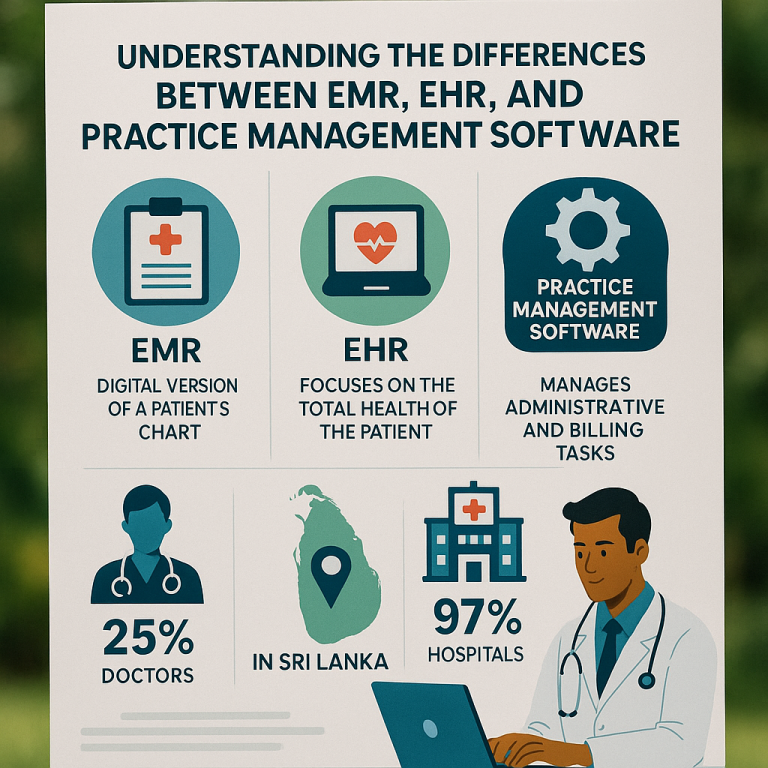
The need for a Private Practice Management System in Sri Lanka has become increasingly apparent, especially as healthcare digitisation accelerates. A well-rounded management system aids doctors in managing Electronic Medical Records (EMR) and Electronic Health Records (EHR), centralising patient records for easy access. With features like appointment scheduling, billing, and telemedicine integrated into a single platform, healthcare providers can enhance the efficiency of their operations.
For instance, a General Practitioner in Colombo might utilise such a system to streamline follow-up management and clinical documentation. This not only reduces administrative burden but also allows clinicians to focus more on patient care, ultimately improving health outcomes. Moreover, software that efficiently manages medical billing ensures accurate invoicing and timely revenue cycle management, which is crucial for maintaining the financial health of private clinics and healthcare organisations.
Healthcare facilities can leverage analytics to pinpoint trends in patient engagement or treatment efficacy, improving both service delivery and patient satisfaction. By centralising multiple functions from patient management to billing under one umbrella, a Private Practice Management System is essential for local practitioners navigating the complexities of modern healthcare.
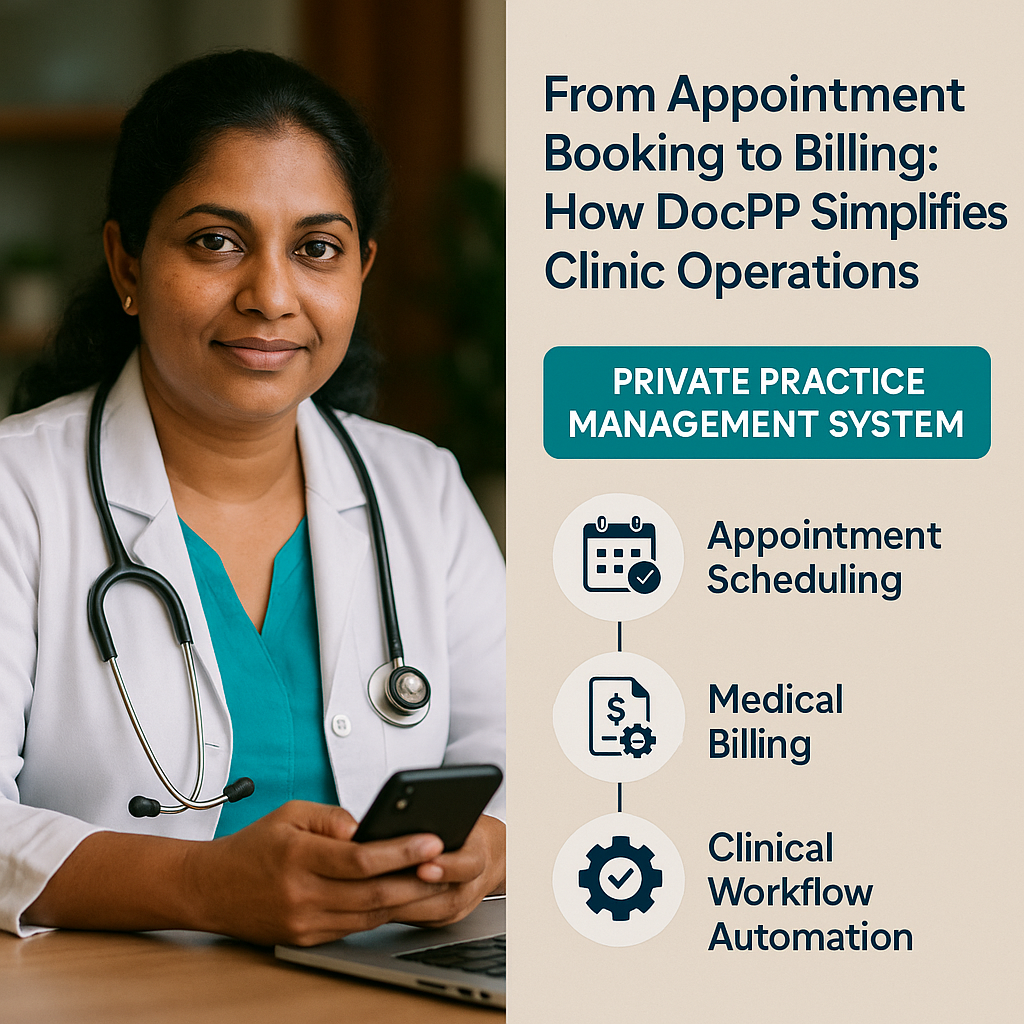
Appointment Scheduling Made Easy with DocPP
Appointment scheduling is a critical component of clinic operations, particularly within Sri Lanka’s healthcare landscape, where patient volume and diverse specialties require streamlined processes. A robust clinical management system simplifies this by automating appointment bookings, reducing front desk workload, and improving patient experience.
DocPP, tailored for Sri Lankan clinics and healthcare providers, facilitates efficient appointment management. By integrating with electronic medical records (EMR), practitioners can access patient histories at the time of scheduling, enabling a comprehensive approach to care. This promotes accuracy in appointment slots and minimizes the risk of overbooking.
For busy specialists and general practitioners, the ability to send digital reminders and confirmations enhances communication with patients, resulting in fewer missed appointments. This proactive patient management is essential for maintaining workflow efficiency and upholding revenue streams, especially in private practice settings.
Additionally, such systems are geared towards meeting local regulatory standards set by the Ministry of Health Sri Lanka and the Sri Lanka Medical Council. They ensure compliance in clinical documentation and patient management protocols, fostering confidence among healthcare practitioners and patients alike.
By harnessing technology in appointment scheduling, clinics can further enhance patient satisfaction through streamlined workflows and optimized resources. Future developments may include telemedicine functionalities, thus expanding patients’ access to healthcare while maintaining operational integrity.
Integrating Medical Billing Software in Clinical Operations
Integrating effective medical billing software within clinical operations is fundamental for enhancing financial accuracy and operational efficiency, particularly in Sri Lanka’s evolving healthcare landscape. As doctors streamline patient management processes, the right medical billing solutions facilitate seamless integration with electronic medical records (EMR) and electronic health records (EHR).
For Sri Lankan private practitioners and specialists, effective billing software not only automates invoicing and payment collection but also ensures compliance with regulations set forth by the Ministry of Health Sri Lanka and the Sri Lanka Medical Council. This digital transition simplifies clinical documentation and billing while enhancing patient experience by minimising administrative burdens.
Utilising clinic appointment software that incorporates billing functionalities allows healthcare providers to manage follow-up appointments effortlessly while ensuring due payments are efficiently tracked. This creates a positive feedback loop – where timely payments reduce administrative stress, enabling doctors to focus on quality patient care.
As healthcare digitisation initiatives gain momentum, integrating billing software within broader clinical workflows can advance healthcare analytics, providing insights into practice profitability, patient demographics, and treatment outcomes. Applying these insights can lead practitioners to make informed decisions about service offerings and operational improvements.
Incorporating these advanced models ensures that healthcare organisations enhance their financial sustainability while streamlining practice management. This is essential in supporting Sri Lanka’s healthcare sector as it grows to meet increasing demands and shifts towards a more integrated digital framework. With these tools, clinics can foster better patient relationships, thus improving health outcomes for all stakeholders involved.
The Role of Clinical Workflow Automation
Clinical workflow automation plays a vital role in enhancing the operational efficacy of clinics and healthcare providers in Sri Lanka. By streamlining processes such as appointment scheduling, digital prescriptions, and clinical documentation, healthcare professionals can markedly reduce administrative burdens and improve patient care. For instance, automated reminders can decrease no-show rates, a common challenge faced by Sri Lankan doctors.
Moreover, integrating Electronic Medical Records (EMR) and Electronic Health Records (EHR) within a digital framework facilitates seamless access to patient records. This accessibility ensures that healthcare providers can make informed decisions rapidly during consultations, thereby expediting the delivery of care. Workflow automation also aids in billing and follow-up management, ultimately contributing to smoother revenue cycles for private clinics and specialist practices.
As Sri Lanka’s healthcare landscape evolves, clinical management systems like DocPP can support practitioners in embracing digitisation. By automating routine tasks, healthcare providers can focus more on patient interactions rather than administrative hurdles, thereby improving overall patient engagement and satisfaction.
Enhancing Patient Engagement through Technology
In the rapidly evolving landscape of Sri Lankan healthcare, enhancing patient engagement through technology is imperative. A Private Practice Management System, such as DocPP, streamlines this process by integrating essential functionalities like medical billing software, appointment scheduling, and digital prescriptions. This integration allows healthcare providers to manage patient records seamlessly within an Electronic Medical Record (EMR) or Electronic Health Record (EHR) framework, facilitating better access to critical information for clinical decision-making.
With the growing trend towards telemedicine, Sri Lankan doctors can leverage these tools to maintain consistent communication with patients. Through efficient follow-up management and timely notifications about appointments or test results, clinics can foster a proactive approach to patient care. Moreover, healthcare analytics embedded in such systems can provide insights into patient trends, enhancing the overall service delivery.
Engaging patients through technology also necessitates a focus on user experience. Ensuring that clinic appointment software is straightforward can build trust and satisfaction among patients. For private healthcare providers in Sri Lanka, adapting to digital solutions is not merely advantageous; it is becoming essential for competitive advantage. Given that the Sri Lanka Medical Council emphasises cross-sector collaboration for improving patient outcomes, healthcare organisations should embrace these innovations to align with national health objectives.
Ultimately, enhancing patient engagement through a well-rounded clinical management system not only improves operational efficiency but also contributes to more meaningful patient-provider interactions, which are vital to the future of healthcare in Sri Lanka.
Navigating Healthcare Compliance and Security
The rapid digitisation of healthcare in Sri Lanka brings critical compliance and security challenges. Sri Lankan clinics and healthcare providers must navigate regulations set forth by the Ministry of Health while safeguarding sensitive patient records, typically managed through Electronic Medical Records (EMR) systems. Adopting secure, clinically tailored software solutions is essential for maintaining patient confidentiality and data integrity.
As clinics transition to digital practice management systems, understanding how clinical workflow automation interacts with legislative requirements ensures robust compliance. For instance, automating appointment scheduling and billing processes requires integrating security features that comply with local laws, thus protecting patient information against breaches.
Moreover, incorporating telemedicine into workflows involves adhering to specific guidelines around patient privacy and data sharing practices. Healthcare professionals need to be familiar with ongoing healthcare digitisation initiatives, ensuring their systems are equipped to handle remote consultations while remaining compliant with regulatory standards.
Ultimately, by prioritising these healthcare compliance and security measures, Sri Lankan healthcare providers can enhance their operational efficiency while building patient trust through transparent management of sensitive information.
The Future of Sri Lankan Healthcare with Digital Solutions
The integration of digital solutions in Sri Lankan healthcare, particularly through systems like DocPP, ushers in a transformative approach to clinical management. With private practice management software, healthcare professionals can streamline patient records, ensuring accurate EMRs and EHRs that facilitate timely data retrieval and comprehensive clinical documentation.
For instance, Sri Lankan GPs can leverage appointment scheduling capabilities that reduce patient wait times while enhancing clinic operations. Digital prescriptions further minimise errors, making it easier for patients to access medications from local pharmacies and reinforcing continuity of care.
Medical billing software integrated within these systems addresses the complexities of healthcare finance, allowing clinics to generate accurate invoices and submit claims efficiently, an essential factor considering Sri Lanka’s diverse healthcare landscape. The automated billing reduces administrative burdens, enabling focus on patient care.
Additionally, telemedicine functionalities support remote consultations, a key consideration in today’s healthcare environment, and align with the Ministry of Health Sri Lanka’s initiatives for broader healthcare access. By automating clinical workflows, DocPP helps optimise follow-up management, essential for chronic disease management among the population.
Healthcare analytics tools provide valuable insights for practitioners, helping to identify treatment trends and improve patient outcomes. Emphasising this comprehensive approach to practice management not only enhances operational efficiency but also contributes to the overarching goal of digitising healthcare in Sri Lanka.
Conclusions
The shift towards digital healthcare solutions is essential for improving the efficiency and effectiveness of clinic operations in Sri Lanka. DocPP stands out as a comprehensive Private Practice Management System that not only simplifies appointment bookings and billing but also enhances patient management and engagement through its integrated tools. By adopting platforms like DocPP, healthcare providers can overcome operational challenges, ensuring a better experience for patients and practitioners alike.