Skip to the content
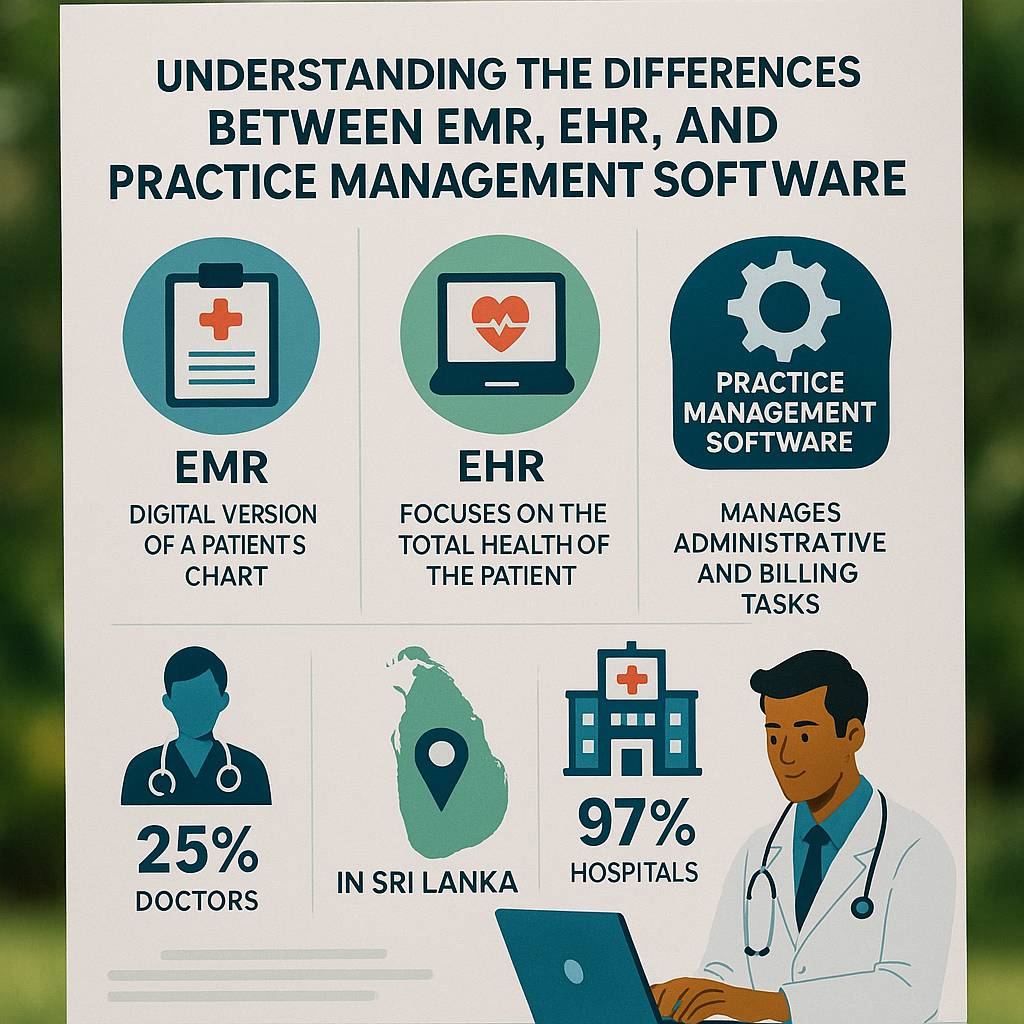
As the healthcare landscape in Sri Lanka evolves, understanding the differences between Electronic Medical Records (EMR), Electronic Health Records (EHR), and practice management software becomes essential for healthcare providers. This knowledge is crucial as medical software trends and cloud clinical systems increasingly shape healthcare technology in the region. In this article, we will explore these concepts in detail, with a focus on how they contribute to healthcare digitisation and patient management in Sri Lankan clinics and hospitals.
Defining EMR, EHR, and Practice Management Software
In the rapidly evolving landscape of healthcare in Sri Lanka, understanding the distinctions between Electronic Medical Records (EMR), Electronic Health Records (EHR), and Practice Management Software is crucial for healthcare professionals. With the push for healthcare digitisation propelled by both the Ministry of Health Sri Lanka and private healthcare providers, tools like DocPP Clinical Management System have emerged as essential components in enhancing patient management and clinic operations.
EMR and EHR, while often used interchangeably, serve distinct purposes that cater to the administrative needs of healthcare providers. An EMR is primarily a digital version of a patient’s chart, containing medical history, diagnoses, medications, treatment plans, and clinical notes. This software is particularly useful for specialists and general practitioners, as it aids in the management of patient data within a particular practice, facilitating efficient clinical documentation and follow-up management. For instance, a GP in Colombo may utilise an EMR to track the treatment progress of patients suffering from chronic illnesses, ensuring that health trends are monitored over time.
In contrast, the EHR serves as a more comprehensive system that integrates patient data across multiple healthcare settings, allowing for shared access among various providers. This is significant in Sri Lanka, where patients often consult multiple healthcare practitioners and specialists during their course of treatment. The EHR’s capability to consolidate patient records into a centralised system supports better healthcare coordination, improves communication among providers, and enhances the overall quality of care. An example here is how a diagnostic centre might share lab results through an EHR with a patient’s consulting medical officer, thereby facilitating more timely and informed clinical decisions.
Practice Management Software complements EMR and EHR by streamlining administrative tasks such as appointment scheduling, billing, and telemedicine functionalities. This type of software is vital for maintaining the operational efficiency of clinics and medical centres. With the increasing demand for digital prescriptions and integrated billing systems, healthcare providers in Sri Lanka can benefit from a platform that brings all these functionalities together. For instance, a private clinic in Kandy could utilise practice management software to manage patient flow and handle billing processes in a single clinical management system like DocPP, thus significantly reducing administrative overhead and allowing more time for patient care.
The trend towards cloud clinical systems is notably visible in Sri Lanka’s healthcare technology landscape. Cloud-based solutions offer a scalable environment where data can be securely stored and accessed by authorised healthcare professionals from multiple locations. This is particularly advantageous for telemedicine services, where healthcare providers can hold virtual consultations and manage patient data in real-time, fostering efficient patient interaction and minimising geographical barriers to healthcare access.
As healthcare innovation continues to advance, trends such as patient engagement tools, healthcare analytics, and automated follow-up management are becoming integral to the success of medical practices. By integrating these features, a system like DocPP not only helps healthcare professionals streamline their workflows but also enhances patient experience, ensuring that they receive timely follow-ups and necessary interventions. This focus on healthcare technology aligns with national initiatives aimed at improving service delivery across Sri Lanka’s healthcare ecosystem.
In summary, understanding the differences between EMR, EHR, and practice management software within the context of Sri Lanka’s healthcare environment underscores the importance of tailored solutions like DocPP. By leveraging these technologies, Sri Lankan doctors, clinics, and healthcare organisations can enhance patient care and operational efficiency, driving the nation towards a more digitised healthcare future.
The Role of EMR in Patient Care
The role of Electronic Medical Records (EMR) in patient care is foundational to the modern healthcare landscape, particularly as Sri Lankan healthcare continues to evolve through digital transformation. EMRs serve as essential tools for recording and managing patient information, thus enhancing the efficiency and quality of care delivered across clinics, hospitals, and specialized practices.
In Sri Lanka, where healthcare providers face a multitude of challenges ranging from patient record management to the need for streamlined workflows, EMRs can significantly improve operational efficiency. For instance, when a general practitioner in Colombo sees a patient with chronic conditions, using an EMR system allows for comprehensive documentation of the patient’s history, current medications, and treatment plans—all accessible at a moment’s notice. This ensures that any subsequent consultations, whether with specialists or consultants, are informed by accurate, up-to-date information, thus enhancing the continuity of care.
DocPP, as a Clinical Management System tailored for Sri Lankan doctors and healthcare organizations, exemplifies how EMR technology can be integrated into everyday practice. For instance, DocPP facilitates digital prescriptions that reduce errors associated with handwritten notes, and improves patient safety by ensuring accurate medication lists are readily available for healthcare providers. This not only minimizes the risk of prescription inaccuracies but also aligns with the initiatives set forth by the Ministry of Health Sri Lanka to digitize healthcare processes.
Moreover, the integration of functionalities like appointment scheduling, clinical documentation, and billing within an EMR system aligns with the increasing demand for comprehensive practice management solutions. For a private clinic in Kandy, adopting an EMR means staff can efficiently manage patient flow and reduce waiting times, ultimately enhancing patient satisfaction. Such an approach also aids healthcare administrators in tracking billing processes, ensuring timely collection from insurance companies, and optimizing revenue cycles.
Telemedicine has gained significant traction in Sri Lanka, especially in the wake of the COVID-19 pandemic. EMRs that incorporate telemedicine capabilities allow physicians to document virtual consultations seamlessly. This means follow-up management can be effectively handled online, ensuring that patients continue to receive care even when physical visits are not feasible. The ability to record encounters digitally enhances the clinician’s ability to analyze trends in patient health, which can lead to better outcomes.
One of the pivotal advantages of using EMRs lies in healthcare analytics. By harnessing data from patient records, Sri Lankan healthcare providers can identify health trends, evaluate the effectiveness of treatments, and tailor care strategies to meet the needs of specific populations. For example, a medical center in Galle could analyze diabetes management across different demographics, leading to informed public health interventions and better resource allocation.
Challenges remain in the implementation of EMRs in the Sri Lankan healthcare context, notably in transitioning from paper-based systems and ensuring that all personnel are adequately trained. However, as healthcare digitisation initiatives gain momentum, the ongoing education and encouragement of healthcare providers to adopt EMR solutions is crucial.
In summary, EMRs are indeed transformative in enhancing patient care within Sri Lanka’s healthcare system. By improving documentation accuracy, fostering a seamless flow of information, and incorporating advanced analytical capabilities, EMR systems like DocPP pave the way for a more connected and efficient healthcare environment, ultimately ensuring that Sri Lankan patients receive the highest standard of medical attention.
EHR: A Comprehensive Approach to Health Information
In the evolving landscape of Sri Lankan healthcare, the adoption of Electronic Health Records (EHR) has become paramount for improving clinical management and enhancing patient outcomes. These systems not only help in documenting patient encounters but also facilitate comprehensive health information management that is critical for healthcare providers, from general practitioners to specialists and medical centres.
DocPP, as a Clinical Management System tailored for Sri Lanka, exemplifies how EHRs can be effectively leveraged within local healthcare workflows. Unlike traditional paper-based records that can lead to inefficiencies and errors, an EHR system offers a digital framework for storing and retrieving patient data, which is increasingly essential in the context of healthcare digitisation initiatives promoted by the Ministry of Health Sri Lanka. Such initiatives are focused on improving patient care and streamlining clinic operations, mirroring global trends in healthcare innovation.
At the heart of an effective EHR system is its capability to maintain tailor-made patient records that integrate seamlessly with workflows typical in Sri Lankan healthcare settings. This includes appointment scheduling, digital prescriptions, and clinical documentation. For instance, a general practitioner in Colombo can utilise an EHR to see the history of a patient’s visits, medications prescribed, and follow-up recommendations, all consolidated in one digital platform. This not only enhances the doctor-patient interaction but also aids in ensuring continuity of care.
Furthermore, EHR systems play a significant role in telemedicine, which has gained traction in Sri Lanka, especially post-pandemic. By allowing healthcare providers to conduct virtual consultations, EHR ensures that patient data is readily available, thereby enhancing the quality and efficiency of remote care. Physicians can access critical health information during teleconsultations, offering a comprehensive healthcare experience that aligns with the expectations of today’s patients.
Healthcare analytics is another area significantly advanced by EHR. By providing robust data collection and reporting capabilities, EHRs enable healthcare providers to monitor patient trends and outcomes effectively. For instance, analysing data from various clinics can reveal patterns in disease prevalence in specific regions, allowing for more targeted public health interventions. Such insights are crucial for specialists working within medical centres who need to understand the broader health landscape of their patient populations.
DocPP, in its design and functionality, integrates essential components that foster a comprehensive approach to health information management. Beyond simply storing patient records, it supports billing and coding, making the financial side of healthcare operations smoother for private practices. The ability to generate accurate billing based on clinical documentation not only reduces administrative burden but ensures compliance with healthcare regulations set forth by the Sri Lanka Medical Council.
As we consider the practice management aspects, EHR systems naturally dovetail into this domain by offering functionalities that simplify clinic operations. This can include managing staff schedules, optimising patient flows, and even improving patient engagement through reminders and follow-ups. For private clinics in Kandy or Jaffna, leveraging EHR means more efficient operations and, ultimately, enhanced patient satisfaction.
In conclusion, the move towards EHR adoption in Sri Lanka represents a significant step in modernising healthcare delivery. While challenges remain, including the need for training and effective change management strategies, the benefits of having a comprehensive EHR approach, as provided by platforms like DocPP, are becoming increasingly clear. This evolution not only reflects the global shift towards digitisation but also aligns with local efforts in enhancing healthcare quality and accessibility across the nation.
Practice Management Software: Streamlining Operations
In the evolving landscape of Sri Lankan healthcare, the integration of technology into practice management is crucial for enhancing the efficiency of operations within clinics and medical centres. Practice Management Software (PMS) serves as an essential tool that streamlines various administrative and clinical processes. In this context, the DocPP Clinical Management System stands as a relevant solution tailored for the needs of Sri Lankan doctors and healthcare organisations.
One of the key features of practice management software includes its ability to facilitate appointment scheduling. In a busy clinic environment, managing patient appointments efficiently can significantly improve workflow and patient satisfaction. For instance, Sri Lankan practitioners can utilise PMS to automate reminders for upcoming appointments, reducing no-shows and optimising patient flow. This level of organisation not only saves time for healthcare providers but also enhances the overall patient experience.
Beyond scheduling, PMS also integrates with Electronic Medical Records (EMR) and Electronic Health Records (EHR). By consolidating patient records into a single platform, healthcare providers can access vital information swiftly, ensuring continuity of care. In Sri Lanka, maintaining comprehensive and accurate patient records is essential, especially for specialists who rely on detailed medical history for accurate diagnostics and treatment plans. The integration of documentation processes allows practitioners to transition seamlessly from clinical encounters to administrative tasks, reinforcing the importance of healthcare digitisation in improving patient outcomes.
Moreover, the capability of PMS to manage digital prescriptions is becoming increasingly important in modern healthcare. By automating the prescription process, Sri Lankan doctors can minimise errors associated with handwritten prescriptions and enhance communication with pharmacies. This feature is particularly relevant given the rising emphasis on patient safety and medication adherence within Sri Lanka’s healthcare framework.
Billing and claims management are another cornerstone of practice management software. With the complexities involved in insurance billing in Sri Lanka, a robust PMS can streamline financial processes, ensuring accurate invoicing and timely collections. This not only optimises revenue cycles for healthcare providers but also reduces the administrative burden associated with manual billing practices, allowing clinicians to dedicate more time to patient care rather than paperwork.
Furthermore, as telemedicine continues to gain traction in Sri Lanka, PMS possesses capabilities that support remote consultations and follow-up management. By integrating telehealth features, healthcare providers can reach patients in rural areas or those unable to visit clinics, thus expanding their service delivery. The versatility of a comprehensive PMS like DocPP is evident in its ability to adapt to changing patient needs, particularly in a post-pandemic context where digital interactions have become a norm.
Healthcare analytics is a growing trend that practice management software is well-equipped to handle. By leveraging data derived from various functions within the PMS, healthcare providers can gain insights into practice performance, patient demographics, and treatment outcomes. For instance, clinics can analyse patient flow trends to identify peak seasons or adjust staffing accordingly, thereby improving operational efficiency. The insights gained can also guide strategic decision-making that aligns with the overarching goals of Sri Lanka’s healthcare objectives, as outlined by the Ministry of Health.
As healthcare systems worldwide move towards digitalisation, the significance of adopting comprehensive practice management solutions becomes clear. For Sri Lankan healthcare providers, embracing tools like DocPP not only streamlines operations but also enhances the quality of care delivered to patients. With the focus on improving clinic operations, efficient patient management, and integrating healthcare technology, practice management software plays an indispensable role in the future of Sri Lankan healthcare.
Integrating EMR and EHR with Practice Management Solutions
In the evolving landscape of healthcare in Sri Lanka, the integration of Electronic Medical Records (EMR), Electronic Health Records (EHR), and Practice Management Solutions plays a crucial role in enhancing the quality and efficiency of patient care. These systems work synergistically to streamline workflows, improve patient management, and facilitate effective clinic operations, making them indispensable tools for healthcare providers in the country.
The DocPP Clinical Management System exemplifies a comprehensive solution that aligns with the needs of Sri Lankan doctors, clinics, and healthcare organisations. By optimising administrative and clinical processes, DocPP allows healthcare providers to focus on delivering high-quality patient care. Its functionalities encompass EMR and EHR capabilities alongside essential practice management features, providing a holistic approach that addresses various aspects of healthcare delivery.
EMR systems are designed to manage patient records and clinical documentation, capturing essential medical data and treatment histories. In Sri Lanka, this is particularly important as healthcare providers must ensure continuity of care, especially in multi-specialty settings where referrals between general practitioners, specialists, and diagnostic centres are common. By consolidating patient information in a single digital record, healthcare professionals can make informed decisions, reduce errors, and enhance communication across different healthcare entities.
Conversely, EHR systems extend beyond mere medical records to include a broader view of patient health information, allowing for an integrated approach to wellness and chronic disease management. For instance, the integration of EHRs with healthcare analytics enables providers to track patient outcomes and evaluate the effectiveness of treatments over time. Such capabilities are invaluable in the context of Sri Lanka, where a growing emphasis on preventive health measures and public health initiatives is evident, facilitated by entities such as the Ministry of Health Sri Lanka.
Moreover, the need for efficient appointment scheduling, digital prescriptions, and follow-up management is paramount for busy clinics and medical centres. By adopting a Clinical Management System like DocPP, healthcare providers can automate these processes, significantly reducing waiting times and enhancing patient satisfaction. This is especially relevant in urban areas where access to healthcare services can be limited by administrative inefficiencies.
As Sri Lanka embraces healthcare digitisation, telemedicine emerges as a vital component of the healthcare technology landscape. The ability to conduct remote consultations not only extends access to healthcare but also allows doctors to manage patient follow-ups effectively. Integrated systems that combine EMR and EHR with telemedicine capabilities streamline communication and documentation, empowering healthcare providers to maintain continuity of care even in a virtual environment.
Integration also optimises financial management through features such as billing and insurance claims processing. This is essential for private clinics and healthcare organisations that must navigate a complex reimbursement landscape. By incorporating these functionalities into a single system, healthcare providers can ensure greater accuracy in billing practices, reduce claim denials, and improve overall revenue cycle management.
Healthcare innovation in Sri Lanka is also reflected in the adoption of cloud clinical systems, which offer scalable solutions for data storage and access. By utilising cloud technology, healthcare providers can ensure that patient records are securely stored and readily accessible from multiple devices, facilitating collaborative care environments. This aligns with global trends towards remote healthcare solutions, which have become increasingly important in light of recent global health challenges.
In conclusion, the integration of EMR, EHR, and practice management solutions within a Clinical Management System like DocPP supports the evolving needs of Sri Lankan healthcare providers. It enhances operational efficiency, improves patient management, and equips healthcare professionals to deliver effective care in an increasingly digital landscape. As healthcare technology continues to advance, it is essential for practitioners to stay informed about emerging trends and leverage these tools to promote better patient outcomes in Sri Lanka.
Telemedicine and its Impact on Healthcare Delivery
Telemedicine has emerged as a transformative element in the landscape of healthcare delivery, particularly in regions like Sri Lanka where access to medical services can be limited by geography and resource availability. The incorporation of telemedicine into clinical practice is reshaping how Sri Lankan healthcare providers manage patient care, enhance operational efficiency, and accommodate the growing expectations of patients for more accessible health services.
In the Sri Lankan context, the adoption of telemedicine is being encouraged by the Ministry of Health, which has recognised the potential of digital health solutions to bridge existing service gaps. As more healthcare providers, including doctors, clinics, and medical centres, implement telemedicine, they are also integrating clinical management systems like DocPP that facilitate seamless healthcare delivery. By streamlining workflows, these systems enable practitioners to manage patient appointments, clinical documentation, and follow-ups in a more efficient manner.
For instance, telemedicine platforms integrated with clinical management software allow for real-time consultations and digital prescriptions, enabling doctors to consult with patients remotely. This is particularly beneficial in rural areas where patients may have to travel long distances to see a healthcare provider. By using DocPP’s capabilities, a general practitioner can conduct video consultations, update patient records in real-time, and refer patients to specialists without necessitating unnecessary travel, all while ensuring compliance with local regulations stipulated by the Sri Lanka Medical Council.
Furthermore, telemedicine supports improved patient management and engagement. Through patient portals, doctors can easily communicate follow-up care instructions, share lab results from associated diagnostic centres, and manage chronic conditions more effectively. As patients increasingly turn to digital tools for their healthcare needs, the ability to offer telemedicine contributes positively to patient satisfaction and adherence to treatment plans.
Moreover, healthcare technology trends indicate a significant movement towards cloud-based clinical systems. Utilising cloud technology in telemedicine infrastructure allows for better data management and security, which is crucial for maintaining patient confidentiality and trust. These electronic medical records (EMRs) and electronic health records (EHRs) can be accessed from various locations, enabling healthcare practitioners to deliver care irrespective of their physical location.
In terms of operational workflow, practicing telemedicine effectively involves utilising features like appointment scheduling, automated reminders for follow-ups, and advanced billing systems that can manage payments within teleconsultations. By adopting a system such as DocPP, healthcare providers can unify patient records and operational management, reducing the administrative burden and allowing more focus on providing high-quality care.
As healthcare providers in Sri Lanka continue to embrace telemedicine, they will also encounter the necessity for healthcare analytics. By leveraging data derived from patient interactions and treatment outcomes, healthcare organisations can make informed decisions about service improvements and resource allocation. Moreover, understanding patient demographics and trends can help in tailoring services to meet specific community needs better.
The integration of telemedicine into healthcare delivery is not merely an enhancement of existing services; it represents a shift towards a more patient-centric approach. With the ongoing digitisation initiatives in Sri Lanka’s healthcare sector, the combination of telemedicine with clinical management systems can pave the way for a more cohesive healthcare ecosystem. Doctors and administrators looking to position their practices at the forefront of this evolution must remain agile and responsive to the technological advancements and regulatory changes shaping the future of healthcare delivery.
In conclusion, as telemedicine becomes increasingly ingrained in Sri Lankan healthcare delivery, understanding its implications on practice management is essential for practitioners. The use of robust clinical management systems like DocPP will aid in harnessing the full potential of telemedicine, ensuring that healthcare providers can deliver comprehensive services efficiently and effectively. This approach aligns with global healthcare trends while responding to local challenges, ultimately enhancing the overall patient care experience within the Sri Lankan healthcare landscape.
The Importance of Compliance and Security in Healthcare Software
In the current landscape of Sri Lankan healthcare, the importance of compliance and security in healthcare software cannot be overstated. With the accelerating adoption of digital tools, healthcare providers, including doctors, clinics, and specialists, are increasingly reliant on robust clinical management systems like DocPP. This reliance brings forth critical responsibilities concerning patient data security and regulatory compliance, especially in the context of the Ministry of Health’s directives and the Sri Lanka Medical Council’s guidelines.
Compliance plays a crucial role in the effective functioning of electronic medical records (EMR) and electronic health records (EHR). As Sri Lankan healthcare providers transition towards digitally managing patient records, ensuring adherence to local regulations is paramount. Failure to comply can result in significant legal ramifications and undermine the trust that patients place in their healthcare providers. For instance, maintaining confidentiality and ensuring the integrity of patient data is not just a best practice but a legal requirement.
Security measures must be integrated within Clinical Management Systems. The need for protecting sensitive patient information from cyber threats is a pressing concern that demands robust security protocols. A compliance-focused approach involves understanding and implementing measures such as data encryption, regular security audits, and employee training on data protection best practices. For instance, when using digital prescriptions, clinicians must ensure that these communication channels are secure to protect patient confidentiality.
In the context of healthcare digitisation in Sri Lanka, healthcare analytics also offer insights that can help improve compliance and security efforts. Analysing data trends can help healthcare providers identify potential vulnerabilities in their systems and address them proactively. This not only safeguards patient information but also streamlines clinic operations, enhancing overall efficiency. By leveraging tools within DocPP that monitor and manage these analytics, healthcare facilities can adapt their workflows to bolster compliance efforts effectively.
The transition to cloud clinical systems, which is gaining traction in Sri Lanka, presents both opportunities and challenges regarding compliance and security. While cloud solutions provide scalability and accessibility, they necessitate rigorous compliance with data protection laws governing patient information. Providers must thoroughly vet cloud service offerings to ensure they meet local compliance standards, including those set forth by the Ministry of Health.
As healthcare providers navigate the complexities of private practice management in Sri Lanka, they must also stay informed on telemedicine regulations and guidelines. The rise of telemedicine means that patient management often extends beyond traditional clinic walls. Therefore, securing patient data during remote consultations necessitates strict adherence to privacy laws and best practices in clinical documentation. Within this framework, solutions such as appointment scheduling and follow-up management must prioritize security to maintain patient trust and safety.
In conclusion, as Sri Lankan healthcare providers increasingly embrace innovative technologies like DocPP, prioritising compliance and security within healthcare software is essential. Implementing robust security measures, adhering to regulations, and utilising healthcare analytics will not only improve patient care outcomes but also foster a culture of trust and accountability in healthcare delivery. These efforts are crucial for sustaining the momentum of healthcare digitisation in Sri Lanka, positioning healthcare organisations for a prosperous future in a rapidly evolving digital landscape.
Future Trends in Medical Software for Sri Lanka
In the landscape of Sri Lankan healthcare, the rapid evolution of digital healthcare solutions is crucial in addressing burgeoning challenges within the system. With ongoing initiatives aimed at digitizing healthcare processes, providers are increasingly adopting innovative medical software. This shift is not merely about keeping pace with technological advancement; it is fundamentally about improving patient outcomes, streamlining operations, and enhancing the overall quality of care available across the island.
One notable trend is the integration of cloud clinical systems, which offer healthcare providers the flexibility and accessibility to manage patient information effectively. For instance, a private clinic in Colombo could leverage a cloud-based Clinical Management System to maintain electronic health records (EHR) and electronic medical records (EMR), allowing doctors and specialists, such as GPs and consultants, to access comprehensive patient records anytime and anywhere. Cloud systems also facilitate better collaboration among various healthcare providers and institutions, including diagnostic centres and laboratories, fostering a more integrated approach to patient care.
Innovative features in medical software are increasingly focusing on patient management functionalities. The digitalisation of appointment scheduling reduces administrative burdens and minimizes no-show rates, which is particularly beneficial for Sri Lankan clinics and healthcare organisations striving to optimize their operations. Additionally, digital prescriptions eliminate the need for handwritten notes, ensuring accuracy and improving the patient experience as they manage their medications.
The broader trend of telemedicine, which gained significant traction during the COVID-19 pandemic, has become an essential component of Sri Lanka’s healthcare framework. Healthcare technology now allows providers to conduct virtual consultations, making healthcare services accessible to patients in remote areas. This shift is not only relevant for urban centres but equally vital for rural populations who may otherwise lack access to essential medical services. For Sri Lankan doctors, integrating telemedicine capabilities within their practice management software can streamline follow-up management and enhance continuity of care.
Healthcare analytics is another critical aspect influencing the future of medical software in Sri Lanka. By employing data-driven insights, healthcare providers can understand patient trends, identify areas for improvement, and optimise clinical workflows. For example, DocPP, as a Clinical Management System, can provide analytics tools to help clinics monitor patient demographics, treatment outcomes, and operational efficiencies. This capability allows healthcare administrators to make informed decisions based on comprehensive data, ultimately leading to improved patient care and resource management.
Further, the importance of compliance and security cannot be overstated. Healthcare providers must ensure that the technology they employ adheres to regulations set forth by entities such as the Ministry of Health Sri Lanka and the Sri Lanka Medical Council. As practices digitize, they must remain vigilant against data breaches and privacy concerns, understanding that adopting robust healthcare technology solutions involves a commitment to maintaining the confidentiality and integrity of patient data.
Incorporating the latest advancements in medical software, alongside a comprehensive understanding of local healthcare workflows, positions Sri Lankan doctors and healthcare entities to adapt to a rapidly advancing digital landscape. As a result, the proactive adoption of integrated healthcare technologies can significantly enhance private practice management and clinic operations across the country, fostering a culture of innovation and digital healthcare that is responsive to both current and future challenges.
Conclusions
In conclusion, understanding the distinctions between EMR, EHR, and practice management software is critical for healthcare providers in Sri Lanka. As the healthcare ecosystem evolves with innovations in digital healthcare, adopting integrated solutions like DocPP can promote operational efficiency, improve patient care, and support the ongoing digitisation of healthcare practices.