
As the landscape of healthcare evolves, private doctors in Sri Lanka must stay ahead by integrating technology that enhances patient care and operational efficiency. In 2026, adopting a Cloud-Based Practice Management System such as DocPP is no longer optional but a necessity. This article delves into the reasons why every private doctor should consider implementing Private Practice Management Software, highlighting key features and benefits tailored for the Sri Lankan healthcare environment.
The Rise of Cloud Medical Software in Sri Lanka
The adoption of cloud medical software in Sri Lanka is revolutionising private practice management. Tools like DocPP provide clinical management solutions that streamline workflows for doctors, clinics, and healthcare organisations. Features such as Electronic Medical Records (EMR) and appointment scheduling are crucial for enhancing patient management in a busy practice.
For Sri Lankan specialists and general practitioners, a cloud-based system allows for seamless integration of patient records, facilitating easy access and updating. This is particularly vital in a landscape where quick decision-making can be essential for patient outcomes. Practitioners can also leverage digital prescriptions and follow-up management features, significantly reducing administrative burdens and minimising errors.
Healthcare digitisation initiatives promoted by the Ministry of Health Sri Lanka underscore the importance of such systems in modernising healthcare delivery. With the increasing demand for telemedicine, having a comprehensive doctor practice software can enable remote consultations, further extending the reach and efficiency of private practices and medical centres.
Incorporating healthcare analytics into practice management helps Sri Lankan healthcare providers identify trends in patient care, ensuring that they can make informed decisions about treatment approaches. As cloud medical software continues to gain traction, Sri Lankan doctors must embrace these innovative tools to remain competitive and responsive to patient needs.
Understanding Clinical Management Systems: A Vital Tool for Doctors
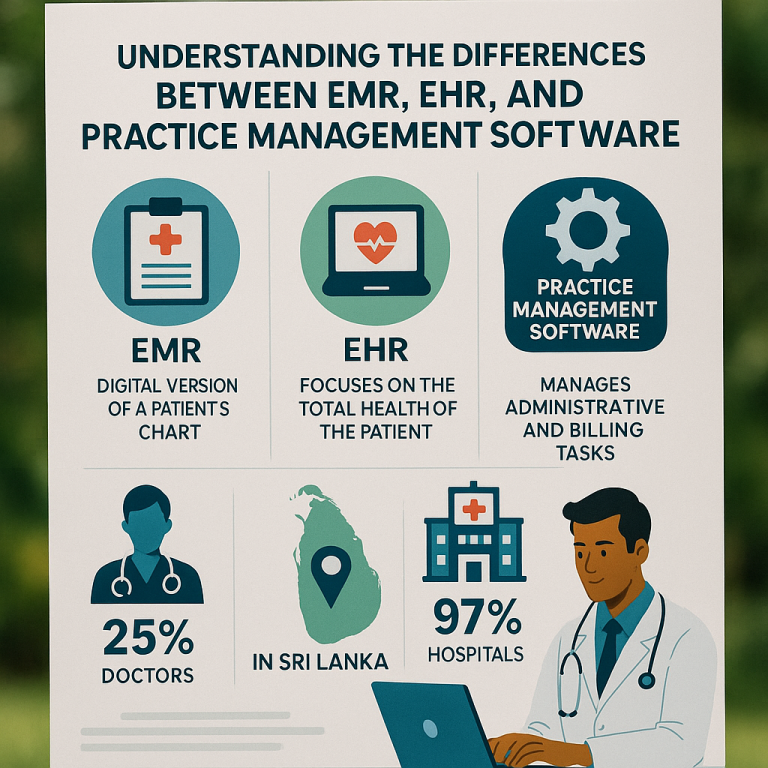
Understanding clinical management systems is essential for enhancing the operational efficiency of private practices in Sri Lanka. Tools like DocPP serve to streamline healthcare workflows, integrating functionalities such as EMR and EHR to manage patient records effectively. This ensures GPs and specialists can access comprehensive patient histories at the click of a button.
Appointment scheduling becomes seamless with a robust system in place, fostering better patient management while reducing clerical burdens on staff. Digital prescriptions facilitate more accurate and efficient prescribing practices, ultimately leading to improved patient adherence and safety.
Further, billing and insurance claims can be processed electronically, minimising errors and expediting revenue cycles for private clinics. Telemedicine capabilities, integrated within such systems, support remote consultations, which have become increasingly necessary in recent times, especially during public health crises.
Clinical documentation becomes standardised, ensuring compliance with the Sri Lanka Medical Council’s guidelines and the Ministry of Health’s regulations. This further aids in follow-up management, with systematic reminders for healthcare providers to track patient progress and compliance.
Healthcare analytics embedded within the clinical management system allow practitioners to assess and improve service quality. By analyzing patient demographics and treatment outcomes, healthcare organisations can refine their approaches, offering tailored care that resonates with the unique needs of the Sri Lankan population.
Thus, the implementation of a clinical management system like DocPP is not just a technological upgrade; it is a critical shift towards digitally enhanced healthcare delivery that aligns with the movement towards healthcare digitisation in Sri Lanka.
Key Features of DocPP: Transforming Patient Engagement and Care
DocPP serves as a clinical management system, fine-tuned for the unique workflows of Sri Lankan healthcare providers. With robust features that facilitate patient engagement, it allows doctors to streamline appointment scheduling and maintain comprehensive patient records, enhancing the overall efficiency of private practices.
One key aspect is the electronic medical record (EMR) integration, which enables clinicians to access and update patient information instantly. This not only improves continuity of care but also aligns with the Ministry of Health Sri Lanka’s initiatives toward healthcare digitisation.
DocPP also supports digital prescriptions, reducing medication errors and facilitating seamless communication with local pharmacies. Furthermore, its telemedicine capabilities allow practitioners to consult with patients remotely, crucial for patients in rural areas lacking immediate access to healthcare facilities.
For billing and clinical documentation, the system simplifies administrative tasks and reduces the time spent on paperwork. This efficiency is particularly beneficial for busy specialists managing multiple patients daily, allowing them to devote more attention to patient care.
Additionally, follow-up management features help ensure patients adhere to prescribed treatment plans, leading to improved health outcomes. Healthcare analytics within DocPP also enables practices to evaluate their performance, identify trends, and optimize operations to serve the community better.
In conclusion, as Sri Lanka moves towards more integrated healthcare solutions, the adoption of cloud medical software like DocPP can substantially enhance patient care, streamline clinic operations, and support healthcare professionals in meeting regulatory standards while improving patient engagement.
Benefits of Integrated Doctor Practice Software for Private Practices
Integrating a cloud-based practice management system like DocPP significantly enhances the operational efficiency of private practices in Sri Lanka. By streamlining patient management processes such as appointment scheduling and EMR maintenance, healthcare providers can ensure seamless workflows. This integration facilitates more accurate clinical documentation and aids in billing, reducing administrative burdens.
Moreover, with digital prescriptions and healthcare analytics, doctors can deliver personalised care effectively. For example, specialists can track patient histories through EHR features, enabling tailored treatment plans. The streamlined functionalities of a Clinical Management System ensure that clinics can adapt to the Ministry of Health’s guidelines efficiently, supporting ongoing healthcare digitisation efforts in Sri Lanka.
Additionally, private clinics can manage follow-up appointments and telemedicine consultations efficiently, making healthcare delivery more accessible to patients across urban and rural settings. This level of integrated management not only boosts patient satisfaction but also enhances the overall credibility and operational competence of private healthcare entities in Sri Lanka. As healthcare demands evolve, adopting such innovative software solutions becomes paramount.
Telemedicine: Essential for Modern Healthcare in Sri Lanka
In the context of evolving healthcare demands in Sri Lanka, telemedicine has become an essential component, particularly for private practices. Embracing a Clinical Management System like DocPP enhances telemedicine capabilities, enabling local doctors to offer seamless virtual consultations that align with national healthcare standards.
By incorporating features like electronic medical records (EMR) and digital prescriptions, DocPP aids healthcare providers in maintaining comprehensive patient records while facilitating efficient follow-up management. This integration fosters improved patient outcomes, as doctors can monitor health changes through regular telehealth appointments, vital in remote areas.
Moreover, app innovations streamline appointment scheduling, allowing patients to connect with specialists across Sri Lanka’s diverse medical landscape. For example, a GP in Colombo could easily refer patients to a specialist in Kandy using the robust capabilities of cloud medical software, thus enhancing continuity of care.
Additionally, billing and healthcare analytics functionalities within DocPP can provide insights into service usage, helping practitioners refine their offerings. This data-driven approach empowers private clinics to make informed decisions, optimising healthcare delivery for patients.
Integrating telemedicine into daily practice not only meets patients’ increasing expectations for accessible care but also addresses the ongoing challenges faced by Sri Lankan healthcare providers. Adopting comprehensive doctor practice software promotes efficiency and patient satisfaction, driving the digitisation journey forward while reinforcing the importance of modern healthcare solutions in Sri Lanka.
Healthcare Digitisation in Sri Lanka: The Future of Private Medical Practice
In the evolving landscape of Sri Lankan healthcare, private practice management software like DocPP emerges as crucial for enhancing the operational efficiency of clinics and medical centres. By streamlining workflows such as appointment scheduling and patient records management, these systems integrate seamlessly into existing healthcare operations.
As clinical management systems evolve, Sri Lankan doctors are increasingly adopting electronic medical records (EMR) and electronic health records (EHR) to improve patient documentation. Such digital solutions foster better communication among healthcare providers and reduce administrative burdens, enhancing overall care delivery.
Innovations in digital prescriptions and billing contribute to a more efficient patient experience, allowing doctors to focus on clinical care rather than paperwork. The incorporation of telemedicine capabilities further supports healthcare delivery, enabling follow-up management without the limitations of physical visits.
Additionally, cloud medical software facilitates superior healthcare analytics, enabling practitioners to glean insights from patient data and improve clinical decision-making. The emphasis on healthcare digitisation aligns with initiatives by the Ministry of Health Sri Lanka, serving to modernise and uplift private practice across the nation.
Thus, with tools like DocPP, Sri Lankan doctors can navigate the complexities of private practice management while enhancing patient engagement and meeting the standards set by the Sri Lanka Medical Council and various healthcare entities.
Challenges Faced by Private Healthcare Providers and Solutions Offered by Cloud-Based Systems
The landscape for private healthcare providers in Sri Lanka is fraught with challenges, from inefficient patient management processes to cumbersome clinical documentation. Manual record-keeping often leaves specialists, GPs, and clinics struggling with appointment scheduling, billing, and seamless prescription handling, impeding their ability to deliver optimal care.
Cloud-based systems offer a robust solution by integrating essential functions into a unified platform. For instance, using practice management software like DocPP can streamline operations, enabling healthcare professionals to manage electronic medical records (EMRs) efficiently while ensuring compliance with regulations set by the Ministry of Health Sri Lanka.
Moreover, telemedicine capabilities within such systems allow for consultations without physical visits, increasing access for patients in remote areas. This not only enhances patient engagement but also aligns with ongoing healthcare digitisation initiatives aimed at improving healthcare delivery across the island.
Efficient healthcare analytics tools embedded within cloud medical software empower practitioners to monitor outcomes and manage follow-ups effectively, minimising the risk of errors and ensuring patients receive timely interventions. Organising data seamlessly transforms the workflow, allowing private healthcare providers to focus more on patient care rather than administrative burdens.
To embrace this transformation, Sri Lankan doctors are encouraged to adopt tailored solutions like DocPP, which cater specifically to their unique needs—be it in private clinics, channeling centres, or large medical institutions. Integrating clinical management systems now is essential for the future viability of practices as healthcare continues to evolve in Sri Lanka.
Crisis Management in Healthcare: Ensuring Compliance and Data Security
In the ever-evolving landscape of Sri Lankan healthcare, crisis management hinges on compliance and data security. For private doctors, maintaining patient confidentiality while adhering to regulations from the Sri Lanka Medical Council and the Ministry of Health is paramount. A Clinical Management System, such as DocPP, aids in safeguarding sensitive patient records through secure cloud storage, ensuring data is encrypted and regularly backed up.
Moreover, leveraging cloud medical software enhances operational resilience. For instance, during unforeseen circumstances like natural disasters or pandemics, remote access allows healthcare providers to continue patient management seamlessly. Digital prescriptions, appointment scheduling, and telemedicine functionalities integrated into such systems not only facilitate compliance but also support efficient workflows, ensuring that patients receive timely care.
As Sri Lanka’s healthcare sector embarks on full digitisation, using a structured approach to clinical documentation becomes essential. Healthcare analytics further bolster crisis management by enabling practitioners to monitor workflow efficiency and identify areas of risk, thus fostering proactive rather than reactive measures. Emphasising compliance and data security transforms potential crises into manageable challenges, ultimately enhancing patient trust and care quality in private practice.
Conclusions
The evolution of healthcare demands that private doctors in Sri Lanka leverage technology to meet patient needs and operational challenges. Adopting a robust Cloud-Based Practice Management System, such as DocPP, positions clinics to thrive in a competitive landscape while enhancing patient care quality. The shift towards digitised healthcare is imperative for sustaining growth and improving service delivery in Sri Lanka’s thriving medical ecosystem.